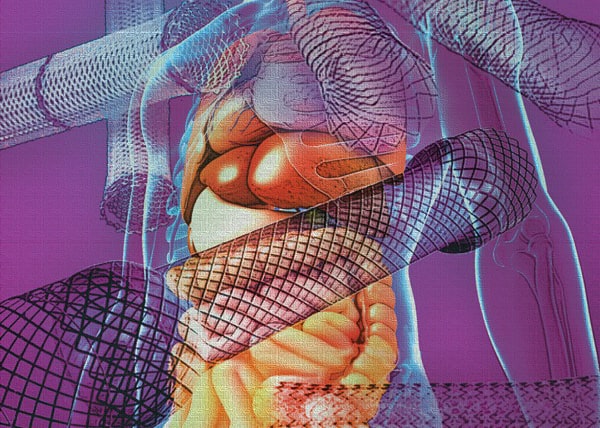
A self-expandable metallic stent (or SEMS) is a metallic tube, or stent that holds open a structure in the gastrointestinal tract to allow the passage of food, chyme, stool, or other secretions related to digestion. Surgeons insert SEMS by endoscopy, inserting a fibre optic camera—either through the mouth or colon—to reach an area of narrowing. SEMS can also be inserted using fluoroscopy where the surgeon uses an X-ray image to guide insertion, or as an adjunct to endoscopy.
The vast majority of SEMS are used to alleviate symptoms caused by cancers of the gastrointestinal tract that obstruct the interior of the tube-like (or luminal) structures of the bowel — namely the esophagus, duodenum, common bile duct and colon. SEMS are designed to be permanent and, as a result, are often used when the cancer is at an advanced stage and cannot be removed by surgery.
Frequently Asked Questions
Metallic Stent Placement is a minimally invasive endoscopic procedure in which a self-expanding metal stent is placed inside a narrowed or blocked part of the digestive tract to keep it open and restore the normal passage of food, fluids, or bile.
This procedure is performed to relieve blockages caused by strictures, tumors, or other conditions affecting the oesophagus, stomach, duodenum, bile ducts, or other parts of the gastrointestinal tract, helping improve swallowing and digestion.
Metallic stents are commonly used to manage oesophageal strictures, gastric outlet obstruction, bile duct obstruction, and gastrointestinal narrowing caused by benign or malignant conditions.
The procedure is performed using an endoscope. The doctor guides the stent to the narrowed area and deploys it, where it expands automatically to keep the passage open.
No. Metallic Stent Placement is a minimally invasive endoscopic procedure that usually avoids the need for major surgery while effectively relieving gastrointestinal obstruction.
The procedure is usually performed under sedation, allowing patients to remain comfortable throughout the treatment. Mild throat or abdominal discomfort may occur temporarily after the procedure.
Metallic stents provide rapid relief from obstruction, improve swallowing or food passage, restore digestive function, reduce symptoms, and promote faster recovery with minimal downtime.
Although generally safe, possible complications include bleeding, infection, stent migration, blockage of the stent, or perforation. Your doctor will explain these risks before the procedure.
Most patients can return home the same day or after a short period of observation, depending on their condition and the type of stent placed. Your doctor will provide recovery and dietary instructions before discharge.
The duration depends on the type of stent, the condition being treated, and your overall health. Your doctor will schedule follow-up visits to ensure the stent is functioning properly and determine if further treatment is required.