
Endoscopic Variceal Ligation in Teynampet, Chennai
What Is an Endoscopic Variceal Ligation?
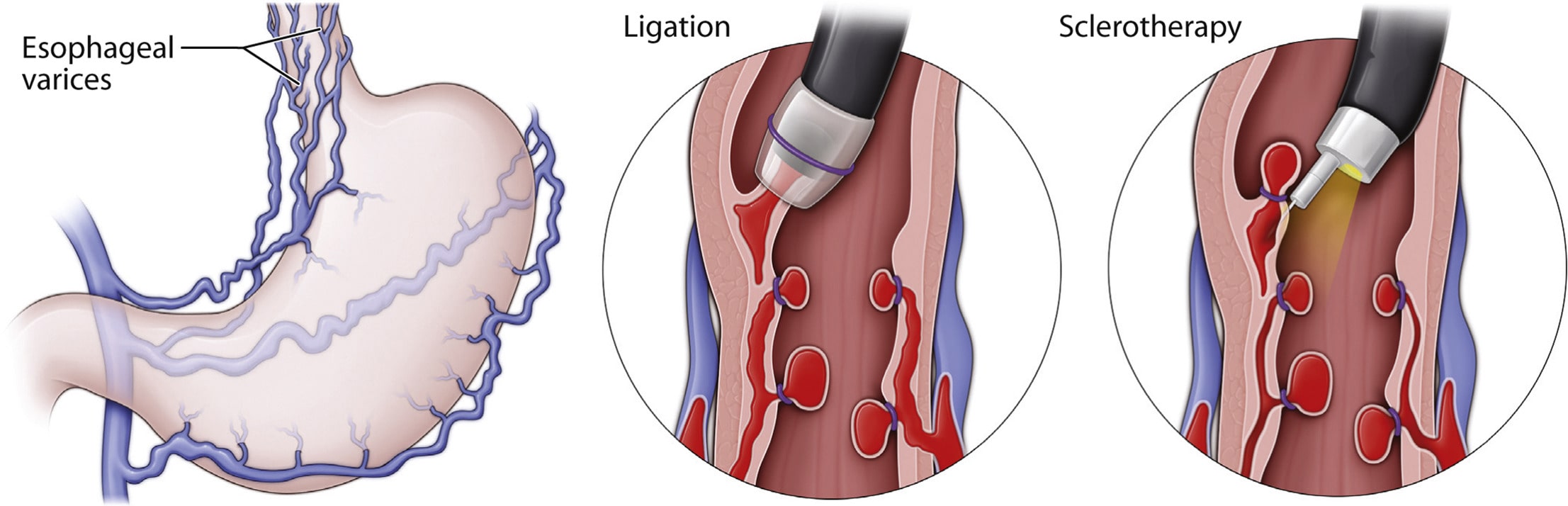
Endoscopic variceal ligation, or endoscopic band ligation, is a procedure that uses elastic bands to treat enlarged veins, or varices, in your oesophagus. These abnormal veins develop in the oesophagus and have thin walls with high blood pressure running through them. If not treated, the veins may rupture and cause severe bleeding.
Book An Appointment for Endoscopic Variceal Ligation Treatment in Teynampet, Chennai.
What Can I Expect?
- You should not eat at least eight hours before the procedure. Your doctor may ask you to stop taking medications including aspirin, blood thinners or antiplatelets one week before the procedure.
- This procedure is performed as part of an upper gastrointestinal (GI) endoscopy. You will be given medicine through an IV to help you relax. Your throat may be sprayed with numbing anesthetic before the endoscope, a thin, flexible tube with a light and camera at the end, is inserted into your mouth and passed down to your oesophagus.
- Using a monitor, your doctor can locate and view the enlarged veins. Then instruments are passed down the scope, and bands are placed around the vein to stop the blood supply.
- With the band in place, the vein sloughs away in a few days to weeks, and your oesophagus heals.
- You should arrange for transportation home since you will not drive due to drowsiness from the sedative and pain medications. You should refrain from any strenuous activity for 24 hours after the procedure.
Talk to the expert, Dr Aditya Shah, Best Gastroenterologist in Teynampet Chennai.
Possible Complications and Side Effects
It is usual for your throat to feel irritated or sore after the procedure.
Despite the unlikelihood of a complication occurring, this procedure does carry its risks. These include infection, return of bleeding, a puncture in the oesophagus wall, sores in the oesophagus, and narrowing.
When you partner with Providence for your procedure, you can rest easy knowing your care team has the necessary skill and experience to reduce your complication risk.
Reach out to the best for more queries, Dr Aditya Shah, Best Gastroenterologist in Apollo Hospital Chennai.